
SPECIALIST SURGICAL CARE
Minimally Invasive Surgery in Lebanon Laparoscopic & Robotic Surgical Techniques
Dr. Gharios uses minimally invasive surgery in Lebanon for selected endocrine, digestive, bariatric, colorectal, and hernia procedures.
Book a Consultation
Rather than one specific operation, minimally invasive surgery describes surgical approaches designed to perform procedures through smaller incisions using specialized instruments and visualization technologies.
Laparoscopic Surgery
Laparoscopic surgery in Lebanon uses a camera and specialized surgical instruments introduced through small incisions.
When appropriate for the condition and patient, laparoscopic surgery may offer:
- Smaller incisions
- Reduced postoperative discomfort
- Shorter hospital stay
- Faster return to daily activities
Robotic Surgery
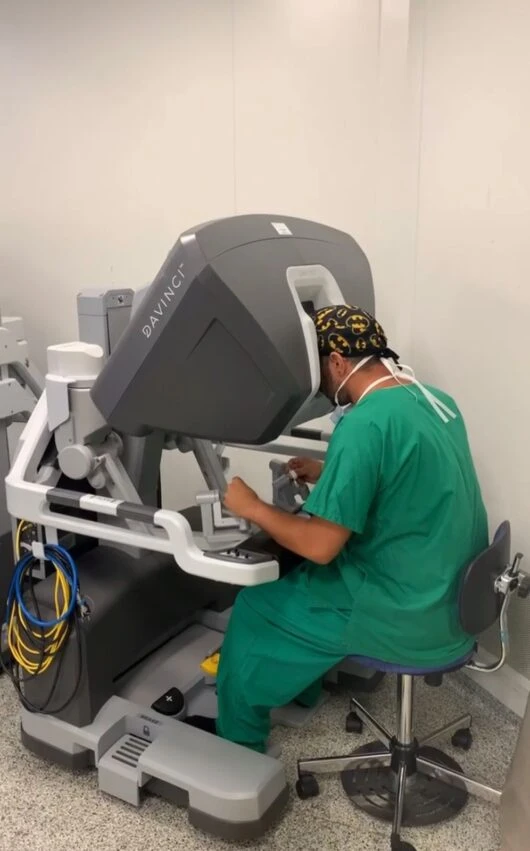
Robotic-assisted surgery is another form of minimally invasive surgery. The robotic platform provides the surgeon with enhanced visualization and highly controlled instrument movement.
It may be used selectively for complex digestive, colorectal, bariatric, and abdominal procedures when it offers a meaningful surgical advantage.
Applications
Minimally invasive and robotic approaches may be considered for:
- Gallbladder surgery
- Hiatal hernia surgery
- Colorectal surgery
- Bariatric surgery
- Hernia repair
- Selected adrenal procedures
- Complex abdominal surgery
Technology Supports Expertise
Robotic and laparoscopic technologies do not replace surgical judgment. The choice of technique depends on the diagnosis, anatomy, complexity of the operation, previous surgery, and individual patient factors.
Frequently Asked Questions
What is minimally invasive surgery?
It refers to surgical techniques that use smaller incisions and specialized instruments rather than a traditional large open incision.
What is the difference between laparoscopic and robotic surgery?
Both are minimally invasive approaches. Laparoscopic surgery uses instruments controlled directly by the surgeon, while robotic surgery uses a surgeon-controlled robotic platform.
Is robotic surgery better for every operation?
No. Robotic surgery is selected when it offers an appropriate clinical or technical advantage for a particular patient and procedure.