
Robotic Surgery in Lebanon Advanced Robotic-Assisted Techniques for Minimally Invasive Surgical Care
Robotic-assisted surgery is an advanced form of minimally invasive surgery that provides enhanced visualization, precise instrument movement, and greater dexterity during selected procedures.
Book Your Consultation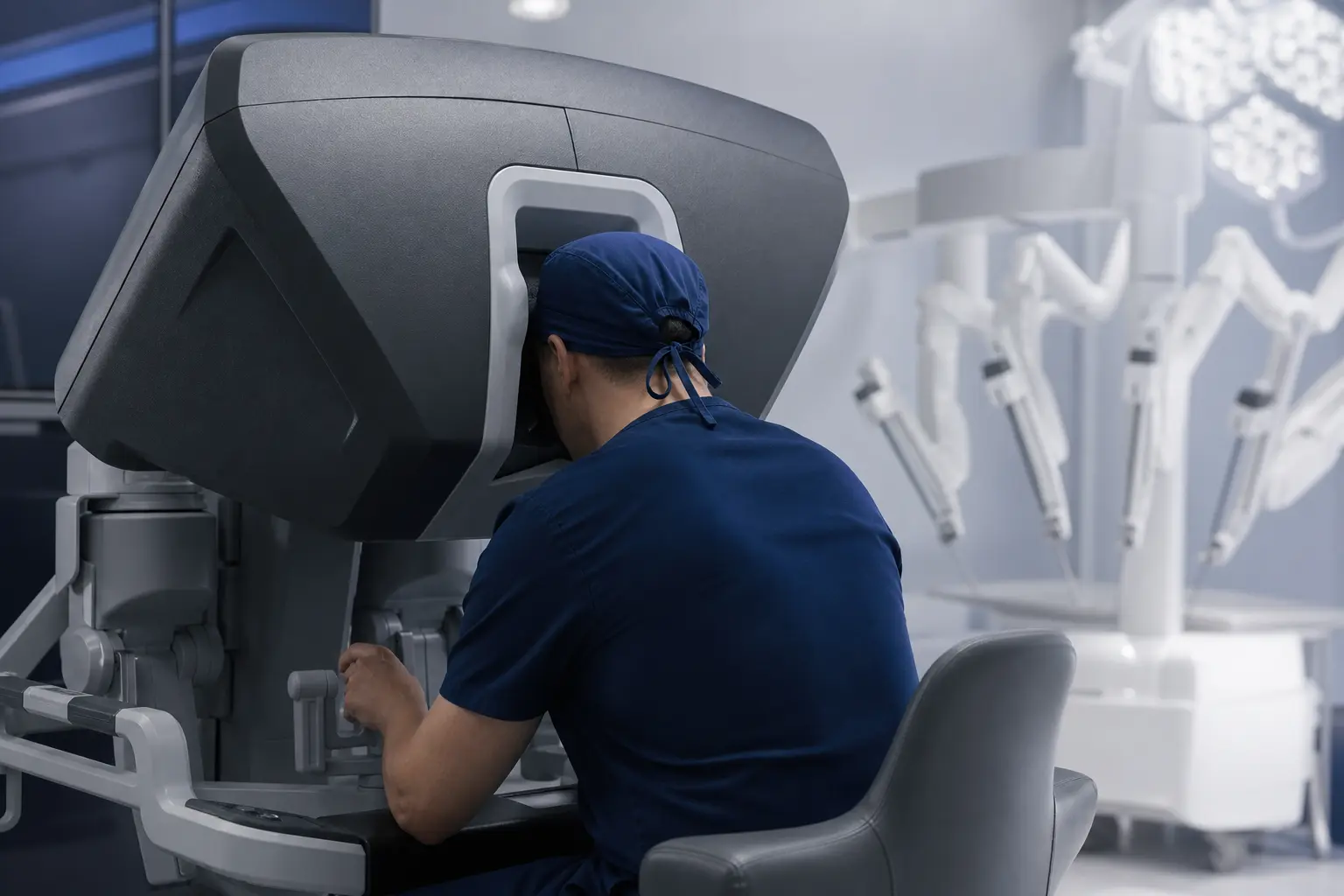
Dr. Joseph Gharios provides robotic surgery in Lebanon for appropriately selected digestive, colorectal, bariatric, and complex abdominal procedures.
The robotic system does not perform the operation independently. It is fully controlled by the surgeon throughout the procedure and is used when its technical capabilities can support the planned surgical approach.
What Is Robotic-Assisted Surgery?
Robotic-assisted surgery allows the surgeon to perform minimally invasive procedures using a surgeon-controlled robotic platform.
During the operation, the surgeon works from a console that provides a magnified, high-definition 3D view of the surgical field. The surgeon's hand movements are translated into precise movements of specialized instruments inside the patient's body.
The technology can provide:
- High-definition 3D visualization
- Magnified views of anatomical structures
- Articulated instrument movement
- Enhanced surgical dexterity
- Precise dissection and suturing
- Minimally invasive access through small incisions
The robotic platform is a surgical tool. Clinical judgment, surgical expertise, and appropriate patient selection remain central to every procedure.
When Is Robotic Surgery Used?
Robotic surgery is not required for every operation.
A robotic approach may be considered when its visualization, instrument articulation, or minimally invasive access offers technical advantages for the specific procedure.
Dr. Gharios may use robotic-assisted techniques for selected:
- Colorectal procedures
- Bariatric procedures
- Gastric surgery
- Complex abdominal procedures
- Revisional procedures when clinically appropriate
The decision is individualized according to the diagnosis, anatomy, complexity of the operation, previous surgery, and overall patient health.
Robotic Colorectal Surgery
Robotic-assisted techniques may be used for selected procedures involving the colon and rectum.
The system's enhanced visualization and articulated instruments can support precise dissection in confined anatomical spaces.
Whether robotic surgery is appropriate depends on the location and complexity of the colorectal condition and the individual patient's anatomy.
Robotic Bariatric Surgery
Selected bariatric procedures may be performed using robotic-assisted techniques.
These can include sleeve gastrectomy and gastric bypass procedures, with the appropriate surgical approach determined according to the patient's anatomy, metabolic condition, previous procedures, and complexity of the operation.
Robotic Gastric Surgery
Robotic technology may also be used for selected gastric and upper digestive procedures where enhanced visualization and instrument control can support the surgical approach.
The decision to use robotic assistance depends on the underlying condition, anatomy, and complexity of the procedure.
Robotic technology is selected when clinically appropriate rather than being used routinely for every gastric operation.
Robotic vs. Laparoscopic Surgery
Both robotic and laparoscopic surgery are minimally invasive approaches performed through small incisions, but the way the surgeon controls the instruments differs.
Laparoscopic Surgery
During conventional laparoscopic surgery, the surgeon directly manipulates long specialized instruments while viewing the operative field on a monitor.
Robotic-Assisted Surgery
During robotic surgery, the surgeon controls articulated instruments from a surgical console while viewing the operative field in magnified 3D.
The most appropriate approach depends on:
- Type of procedure
- Surgical complexity
- Patient anatomy
- Previous operations
- Clinical objectives
- Individual patient factors
Neither technique is automatically superior for every operation.
Potential Benefits of Robotic-Assisted Surgery
For appropriately selected procedures, robotic-assisted surgery may provide technical advantages such as:
- Enhanced 3D visualization
- Magnification of the surgical field
- Greater range of instrument movement
- Precise dissection
- Improved dexterity during complex surgical steps
- Minimally invasive access
Because robotic surgery uses small incisions, patients may also experience benefits associated with minimally invasive surgery, depending on the procedure performed.
Individual outcomes vary according to the condition and complexity of surgery.
Is Robotic Surgery Right for Every Patient?
No. The availability of robotic technology does not mean that it should be used for every procedure.
In some cases, conventional laparoscopic surgery may provide an appropriate minimally invasive approach. In others, open surgery may be necessary based on the disease or surgical complexity.
The decision should be based on what provides an appropriate surgical approach for the individual patient rather than on the technology itself.
The Role of the Robotic Surgeon
A robotic surgeon in Lebanon remains in control of every stage of a robotic-assisted operation.
The robotic platform does not make decisions or perform surgical movements independently. Instead, it translates the surgeon's movements into controlled movements of the instruments.
Successful use of robotic technology therefore depends on surgical training, knowledge of anatomy, procedural expertise, patient selection, and sound clinical judgment.
Recovery After Robotic Surgery
Recovery varies according to the procedure performed rather than simply whether robotic technology was used.
Depending on the operation, postoperative care may include:
- Early walking and mobilization
- Pain management
- Wound care
- Progressive return to eating
- Monitoring of surgical recovery
- Guidance on physical activity
- Follow-up appointments
Patients receive individualized recovery instructions according to their procedure and overall health.
References
- Society of American Gastrointestinal and Endoscopic Surgeons (SAGES)
- European Association for Endoscopic Surgery (EAES)
- American College of Surgeons (ACS)
- Evidence-based guidelines for robotic and minimally invasive surgery
Frequently Asked Questions
What is robotic surgery?
Robotic surgery is a minimally invasive surgical approach in which the surgeon controls specialized robotic instruments from a surgical console.
Does the robot perform the operation?
No. The robotic system does not operate independently. The surgeon controls the instruments and performs the procedure throughout the operation.
What is the difference between robotic and laparoscopic surgery?
Both are minimally invasive. In laparoscopic surgery, the surgeon directly manipulates the instruments. In robotic surgery, the surgeon controls articulated instruments through a robotic platform with magnified 3D visualization.
Is robotic surgery better than laparoscopic surgery?
Not necessarily. Each approach has different technical characteristics. The most appropriate method depends on the operation, complexity, anatomy, previous surgery, and individual clinical factors.
What procedures can be performed robotically?
Selected colorectal, bariatric, gastric, and complex abdominal procedures may be performed using robotic-assisted techniques when clinically appropriate.
Does robotic surgery mean a faster recovery?
Robotic surgery uses minimally invasive access, but recovery depends primarily on the type and complexity of the operation, the underlying condition, and the patient's overall health.
How do I know if robotic surgery is appropriate for me?
A surgical evaluation is required. The decision considers your diagnosis, anatomy, previous operations, overall health, and the specific procedure required.