
Robotic Bariatric Surgery in Lebanon Advanced Minimally Invasive Techniques for Bariatric Surgery
Robotic bariatric surgery combines established weight-loss procedures with robotic-assisted technology designed to provide enhanced visualization, precision, and instrument control during surgery.
Book Your Consultation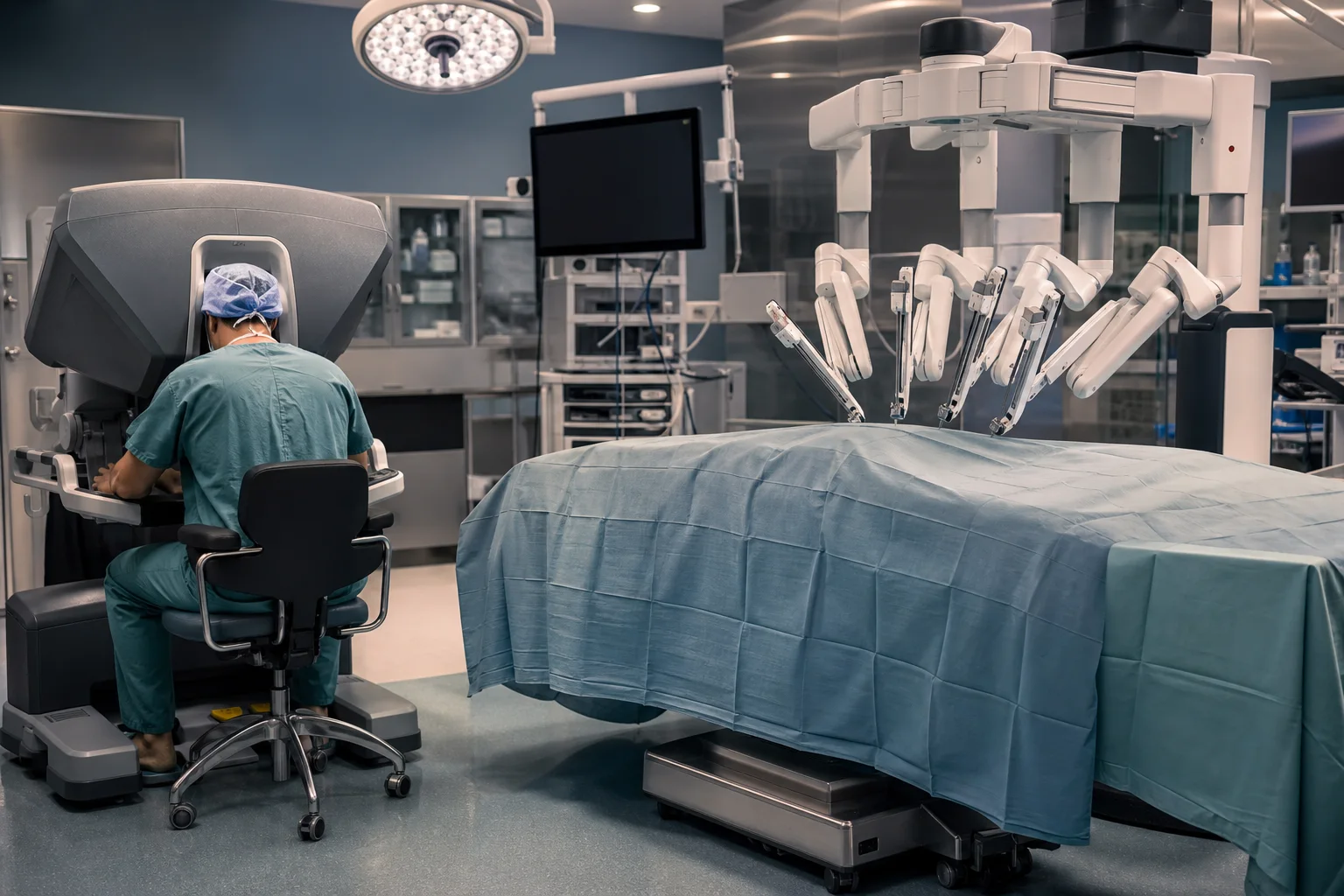
Dr. Joseph Gharios provides robotic bariatric surgery in Lebanon for appropriately selected patients, including robotic sleeve gastrectomy and gastric bypass procedures.
The decision to use a robotic approach is individualized according to the type of bariatric procedure, patient anatomy, previous surgeries, complexity of the case, and overall clinical condition.
What Is Robotic Bariatric Surgery?
Robotic bariatric surgery is a form of minimally invasive surgery in which the surgeon performs the operation using a robotic surgical platform.
The robotic system does not perform the surgery independently. The procedure remains fully controlled by the surgeon.
The technology provides features such as:
- High-definition 3D visualization
- Enhanced instrument control
- Greater range of instrument movement
- Precise surgical dissection
- Minimally invasive access
These capabilities may be particularly useful in selected complex bariatric and revisional procedures.
Who May Be a Candidate for Robotic Bariatric Surgery?
The first consideration is whether bariatric surgery itself is appropriate. The surgical approach—laparoscopic, robotic, or otherwise—is then selected according to the individual case.
Evaluation may consider:
- Body Mass Index (BMI)
- Obesity-related health conditions
- Previous weight-loss attempts
- Previous abdominal or bariatric surgery
- Patient anatomy
- Type and complexity of the planned procedure
- Metabolic health
- Overall medical condition
Robotic technology is used when it provides an appropriate surgical approach for the individual patient.
Robotic Sleeve Gastrectomy
Robotic sleeve gastrectomy in Lebanon uses robotic-assisted technology to perform the established sleeve gastrectomy procedure through small incisions.
During sleeve gastrectomy, a large portion of the stomach is removed, leaving a smaller sleeve-shaped stomach.
The procedure is designed to:
- Reduce stomach capacity
- Help patients feel full with smaller meals
- Influence appetite-related hormonal mechanisms
- Support long-term weight loss
The robotic platform assists the surgeon with visualization and instrument control while the fundamental principles of sleeve gastrectomy remain the same.
Robotic Gastric Bypass
Gastric bypass may also be performed using robotic-assisted techniques in selected patients.
Procedures may include:
Roux-en-Y Gastric Bypass (RYGB)
A smaller stomach pouch is created and connected to the small intestine, changing the pathway through which food travels.
One Anastomosis Gastric Bypass (OAGB)
Also known as Omega Loop Gastric Bypass, OAGB creates a stomach pouch connected to the small intestine using a single gastrointestinal connection.
The appropriate procedure and surgical approach are determined according to the patient's metabolic profile, anatomy, reflux history, previous surgery, and long-term treatment goals.
Potential Advantages of a Robotic Approach
For appropriately selected bariatric procedures, robotic-assisted surgery may offer technical advantages including:
- Enhanced 3D visualization
- Precise instrument movement
- Improved surgical dexterity
- Access through small incisions
- Greater control during complex surgical steps
However, robotic surgery is not automatically the preferred approach for every patient.
The technology is a surgical tool. Appropriate patient selection, surgical expertise, and sound clinical judgment remain central to treatment.
Robotic vs. Laparoscopic Bariatric Surgery
Both robotic and conventional laparoscopic surgery are minimally invasive approaches.
In laparoscopic bariatric surgery, the surgeon operates using long instruments and a camera introduced through small incisions.
In robotic bariatric surgery, the surgeon controls robotic instruments from a surgical console, providing enhanced visualization and articulated instrument movement.
The choice between the two approaches depends on factors such as:
- Type of bariatric operation
- Surgical complexity
- Previous procedures
- Patient anatomy
- Surgeon assessment
- Individual clinical needs
Neither approach should be selected based on technology alone.
Recovery After Robotic Bariatric Surgery
Recovery depends on the bariatric procedure performed, the complexity of the operation, and the patient's overall health.
After surgery, patients follow a structured pathway that may include:
- Progressive postoperative diet
- Early mobilization
- Pain management
- Nutritional supplementation when indicated
- Vitamin and mineral monitoring
- Regular blood tests
- Weight and metabolic monitoring
- Long-term medical and nutritional follow-up
Bariatric surgery is part of a long-term treatment plan rather than a standalone procedure.
References
- International Federation for the Surgery of Obesity and Metabolic Disorders (IFSO)
- American Society for Metabolic and Bariatric Surgery (ASMBS)
- Society of American Gastrointestinal and Endoscopic Surgeons (SAGES)
- Evidence-based guidelines for minimally invasive and metabolic bariatric surgery
Frequently Asked Questions
What is robotic bariatric surgery?
Robotic bariatric surgery uses a surgeon-controlled robotic platform to perform bariatric procedures through small incisions. The robotic system assists with visualization and instrument movement but does not operate independently.
Can sleeve gastrectomy be performed robotically?
Yes. Robotic sleeve gastrectomy may be performed in appropriately selected patients using robotic-assisted minimally invasive techniques.
Can gastric bypass be performed robotically?
Yes. Selected gastric bypass procedures, including Roux-en-Y Gastric Bypass and OAGB, may be performed using a robotic approach.
Is robotic surgery better than laparoscopic bariatric surgery?
Not necessarily. Both are established minimally invasive approaches. The most appropriate technique depends on the procedure, anatomy, previous surgery, complexity, and individual patient factors.
Is the robot performing the surgery?
No. The surgeon remains in control throughout the procedure. The robotic system translates the surgeon's movements into precise movements of the surgical instruments.
Can robotic surgery be used for redo bariatric surgery?
It may be considered for selected revisional or redo bariatric operations, particularly when altered anatomy or previous surgery increases technical complexity.
Does robotic bariatric surgery still require long-term follow-up?
Yes. Regardless of the surgical approach, bariatric patients require ongoing nutritional, metabolic, and medical follow-up.