
MINIMALLY INVASIVE THYROID CARE
Benign Thyroid Nodule Treatment in Lebanon Radiofrequency Ablation (RFA) for Thyroid Nodules
Not every thyroid nodule requires surgery.
Book Your Consultation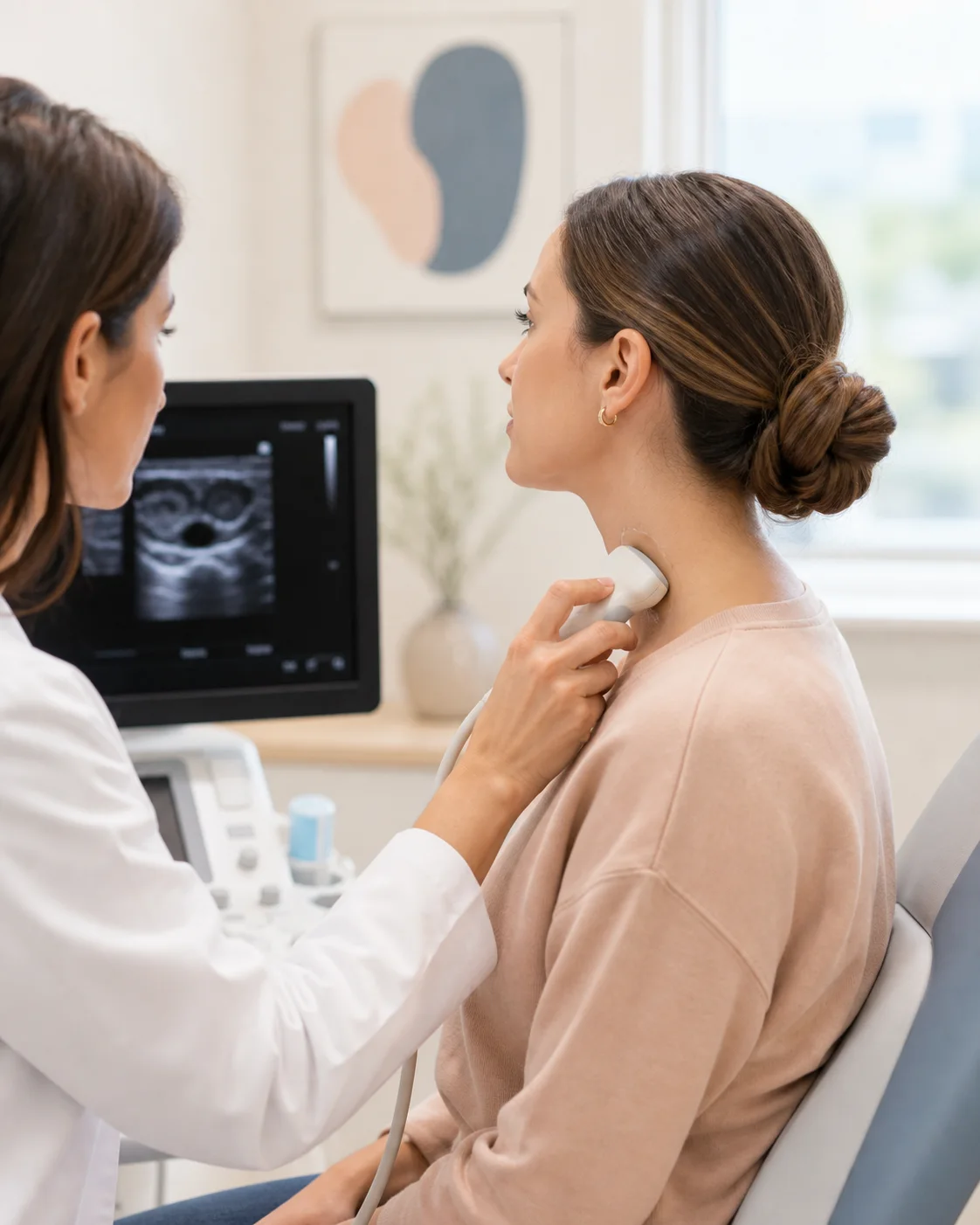
For selected patients with a benign thyroid nodule in Lebanon, Radiofrequency Ablation (RFA) offers a minimally invasive treatment designed to reduce nodule volume while preserving healthy thyroid tissue.
Dr. Joseph Gharios evaluates thyroid nodules and thyroid masses using clinical findings, ultrasound imaging, thyroid function tests, and biopsy results when indicated. RFA is recommended only after confirming that the nodule is appropriate for this treatment.
What Is Radiofrequency Ablation (RFA)?
Radiofrequency Ablation is a minimally invasive technique used to treat selected benign thyroid nodules without surgically removing part or all of the thyroid gland.
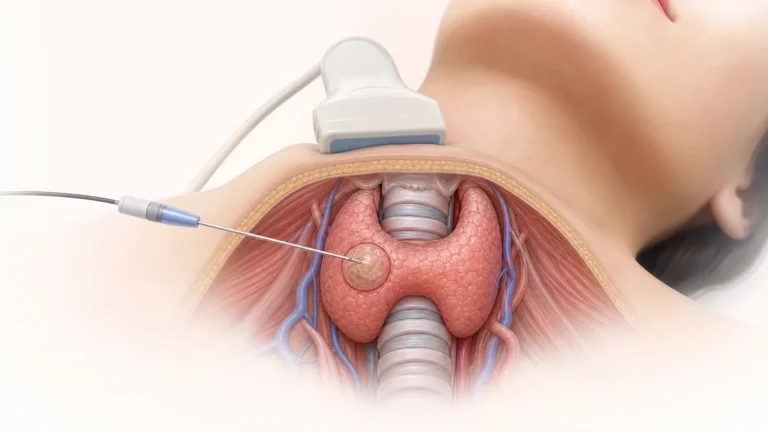
During RFA, a specialized electrode is introduced into the thyroid nodule under ultrasound guidance. Radiofrequency energy generates controlled heat within the targeted tissue, causing the treated portion of the nodule to gradually decrease in volume over time.
The objective is to reduce symptoms or cosmetic concerns while preserving as much normal thyroid tissue as possible.
Which Thyroid Nodules Can Be Treated with RFA?
RFA is not appropriate for every thyroid nodule or thyroid mass.
It may be considered for selected benign thyroid nodules that:
- Cause pressure or discomfort in the neck
- Cause difficulty swallowing
- Produce a visible neck swelling
- Create cosmetic concerns
- Continue to increase in size
- Cause symptoms related to their volume
Before treatment, the nodule must be carefully evaluated to establish its characteristics and confirm that RFA is an appropriate option.
Evaluation Before RFA
A thorough assessment is essential before treating a thyroid nodule with Radiofrequency Ablation.
Evaluation may include:
- Clinical examination
- Thyroid ultrasound
- Thyroid function blood tests
- Fine-needle aspiration (FNA) or other biopsy assessment when indicated
- Review of previous imaging
- Assessment of nodule size, location, vascularity, and ultrasound characteristics
This evaluation helps distinguish benign nodules from thyroid masses that may require further investigation or a different treatment approach.
How Is Thyroid RFA Performed?
Radiofrequency Ablation is performed under ultrasound guidance, allowing the thyroid nodule and surrounding structures to be visualized throughout treatment.
A thin RFA electrode is positioned within the targeted nodule. Controlled radiofrequency energy is then applied to the tissue.
The treated tissue gradually decreases in volume over the following weeks and months rather than disappearing immediately after the procedure.
Because RFA targets the nodule rather than removing the thyroid gland, surrounding healthy thyroid tissue can be preserved.
Benefits of RFA for Benign Thyroid Nodules
For appropriately selected patients, potential advantages include:
- Minimally invasive treatment
- Preservation of healthy thyroid tissue
- No surgical neck incision
- Reduction in nodule volume over time
- Improvement in pressure-related symptoms
- Improvement in cosmetic concerns
- Short recovery period
- Avoidance of thyroid removal surgery in selected cases
The expected outcome depends on the characteristics and size of the nodule and the individual patient's condition.
RFA vs. Thyroid Surgery
RFA and thyroid surgery have different indications and should not be considered interchangeable for every thyroid condition.
RFA may be appropriate for selected benign thyroid nodules where reducing the nodule while preserving thyroid tissue is the treatment objective.
Thyroid removal surgery may instead be required for thyroid cancer, suspicious nodules, certain large goiters, or other conditions where surgical removal is medically indicated.
The appropriate treatment is determined only after evaluating the individual thyroid nodule and the patient's clinical situation.
Why Choose Dr. Joseph Gharios for Thyroid RFA?
Treatment of a thyroid nodule begins with determining whether intervention is necessary at all.
Dr. Joseph Gharios' approach focuses on:
- Careful evaluation of thyroid nodules and masses
- Appropriate patient selection for RFA
- Ultrasound-guided treatment
- Preservation of healthy thyroid tissue
- Evidence-based decision-making
- Individualized treatment planning
- Follow-up to monitor nodule response
The objective is to select the least invasive appropriate treatment while maintaining patient safety and thyroid function.
Follow-Up After RFA
The thyroid nodule does not usually disappear immediately after Radiofrequency Ablation. Instead, it gradually decreases in size as the treated tissue is naturally absorbed by the body.
Follow-up may include clinical assessment and thyroid ultrasound to monitor:
- Reduction in nodule volume
- Changes in symptoms
- Cosmetic improvement
- Thyroid function when appropriate
- Overall response to treatment
The follow-up schedule is individualized according to the characteristics of the treated nodule.
References
- American Thyroid Association (ATA)
- European Thyroid Association (ETA)
- International guidelines and consensus recommendations on thyroid Radiofrequency Ablation
Frequently Asked Questions
Does every benign thyroid nodule need treatment?
No. Many benign thyroid nodules can simply be monitored. Treatment is generally considered when a nodule causes symptoms, continues to grow, creates cosmetic concerns, or has other clinical indications.
Is RFA the same as thyroid surgery?
No. RFA treats the targeted nodule using thermal energy without removing the thyroid gland. Thyroid surgery involves removing part or all of the thyroid and is used when there is a surgical indication.
How do I know if my thyroid nodule is benign?
Assessment may involve ultrasound and, when indicated, tissue sampling such as fine-needle aspiration. The required evaluation depends on the characteristics of the nodule.
Can all thyroid masses be treated with RFA?
No. A thyroid mass must first be properly evaluated. RFA is generally intended for appropriately selected benign thyroid nodules; suspicious or malignant lesions require a different diagnostic and treatment pathway.
Does RFA preserve the thyroid gland?
RFA is designed to target the nodule while preserving surrounding healthy thyroid tissue.
Does the thyroid nodule disappear immediately after RFA?
No. The treated nodule typically decreases progressively in volume over time, which is why follow-up ultrasound is important.
Can a thyroid nodule grow again after RFA?
Regrowth can occur in some cases. Continued follow-up helps assess the response and determine whether additional treatment is necessary.