
SPECIALIST ENDOCRINE CARE
Parathyroid Surgery in Lebanon Specialized Treatment for Hyperparathyroidism & Parathyroid Disorders
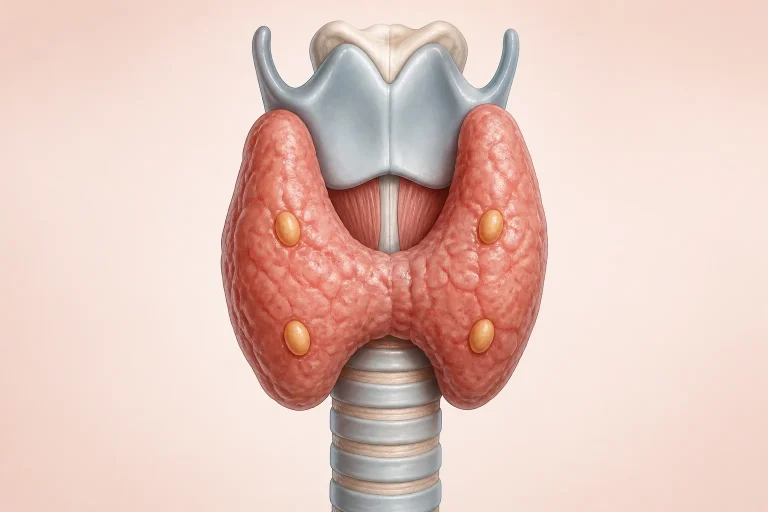
The parathyroid glands are small glands located behind the thyroid that play an essential role in regulating calcium levels in the body. When one or more glands become overactive, they can produce excessive parathyroid hormone (PTH) and disrupt normal calcium balance.
Book Your Consultation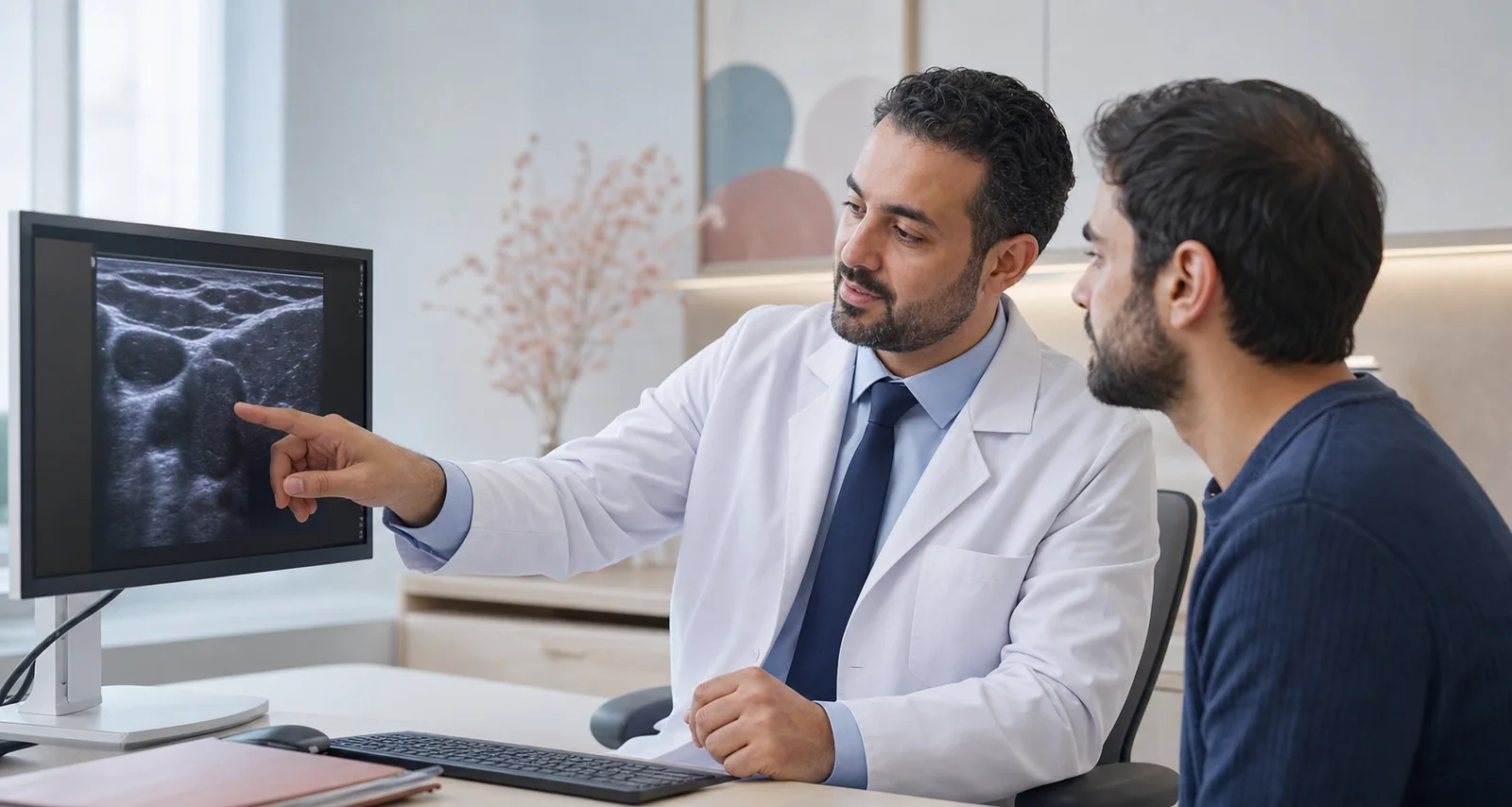
Dr. Joseph Gharios provides specialized parathyroid surgery in Lebanon for patients with hyperparathyroidism and other conditions requiring surgical treatment.
Care begins with biochemical diagnosis, clinical evaluation, and appropriate imaging to determine whether surgery is indicated and identify the most suitable surgical approach.
Understanding the Parathyroid Glands
Most people have four parathyroid glands located close to the thyroid gland in the neck.
Despite their location, the parathyroid glands have a different function from the thyroid. Their primary role is to produce parathyroid hormone (PTH), which helps regulate calcium levels in the blood and supports normal bone, kidney, nerve, and muscle function.
When a parathyroid gland becomes overactive, excessive PTH production can lead to elevated calcium levels and associated health complications.
What Is Hyperparathyroidism?
Hyperparathyroidism occurs when one or more parathyroid glands produce too much PTH.
Primary Hyperparathyroidism
Primary hyperparathyroidism is commonly caused by a benign parathyroid adenoma, although more than one gland may sometimes be involved.
The condition may be discovered through routine blood tests showing elevated calcium levels or during investigation of associated symptoms or complications.
Patients may experience:
- Fatigue
- Muscle weakness
- Bone or joint discomfort
- Kidney stones
- Reduced bone density
- Abdominal or digestive symptoms
Some patients may have few or no noticeable symptoms despite abnormal calcium and PTH levels.
When Is Parathyroid Surgery Recommended?
Not every abnormal parathyroid test automatically requires an operation.
The decision to perform parathyroid surgery is based on the patient's biochemical diagnosis, symptoms, age, calcium levels, bone health, kidney function, and other individual clinical factors.
Surgery may be considered in patients with confirmed primary hyperparathyroidism when there are indications such as:
- Significant elevation of blood calcium
- Kidney stones or kidney involvement
- Reduced bone density or osteoporosis
- Symptoms associated with hypercalcemia
- Other established clinical criteria for surgical treatment
A complete evaluation is necessary before deciding whether surgery is appropriate.
Evaluation Before Parathyroid Surgery
Accurate diagnosis begins with confirming abnormal parathyroid function.
Evaluation may include:
- Blood calcium levels
- Parathyroid hormone (PTH) levels
- Vitamin D assessment
- Kidney function tests
- Bone density evaluation when indicated
- Neck ultrasound
- Additional localization imaging when appropriate
Imaging helps locate an abnormal parathyroid gland before surgery, but the diagnosis of hyperparathyroidism itself is primarily established through biochemical testing.
Parathyroidectomy
A parathyroidectomy is an operation performed to remove the abnormal parathyroid gland or glands responsible for excessive PTH production.
The surgical approach depends on the patient's diagnosis, imaging findings, whether one or multiple glands are involved, and previous neck surgery.
Focused Minimally Invasive Parathyroidectomy
When investigations clearly identify a single abnormal parathyroid gland, selected patients may be candidates for a focused surgical approach.
The objective is to remove the abnormal gland while limiting unnecessary exploration of the neck.
Bilateral Neck Exploration
In some cases, more than one parathyroid gland may need to be evaluated during surgery.
A broader exploration may therefore be appropriate when imaging is inconclusive, multiple-gland disease is suspected, or the patient's condition requires a more extensive surgical assessment.
Intraoperative PTH Monitoring
PTH levels change rapidly after an overactive parathyroid gland is successfully removed.
When indicated, intraoperative PTH monitoring can measure these changes during surgery and provide additional information about whether the source of excessive PTH production has been adequately addressed.
This technology supports surgical decision-making but is used alongside clinical expertise, preoperative evaluation, and operative findings.
Protecting Important Structures
Parathyroid surgery is performed in an anatomically complex area of the neck.
Careful surgical technique is important to identify and protect surrounding structures, particularly the recurrent laryngeal nerves responsible for vocal cord movement.
The surgical objective is to treat the abnormal parathyroid disease while preserving healthy structures and normal function whenever possible.
Parathyroid vs. Thyroid Surgery
The thyroid and parathyroid glands are located close to one another, but they perform different functions.
Thyroid surgery treats diseases involving the thyroid gland, such as thyroid cancer, suspicious thyroid nodules, goiter, or selected cases of hyperthyroidism.
Parathyroid surgery treats disorders involving excessive parathyroid hormone production, particularly primary hyperparathyroidism.
Patients requiring information about thyroid removal can visit the dedicated Thyroid Surgery page.
References
- American Association of Endocrine Surgeons (AAES)
- European Society of Endocrine Surgeons (ESES)
- International Workshop Guidelines for Primary Hyperparathyroidism
Frequently Asked Questions
What does the parathyroid gland do?
The parathyroid glands produce PTH, a hormone that plays an important role in regulating calcium levels in the blood.
What is a parathyroid adenoma?
A parathyroid adenoma is a benign growth affecting a parathyroid gland. It is a common cause of primary hyperparathyroidism and can result in excessive PTH production.
How do I know if I need parathyroid surgery?
The decision is based on blood tests, symptoms, calcium levels, bone and kidney health, and other clinical criteria. A specialist evaluation is necessary to determine whether surgery is indicated.
Is parathyroid surgery the same as thyroid surgery?
No. Although the glands are located close together, thyroid and parathyroid diseases are different and require different treatment approaches.
What is minimally invasive parathyroid surgery?
For selected patients in whom an abnormal gland has been clearly localized, a focused surgical approach may allow the affected gland to be removed through a more limited exploration.
What is intraoperative PTH monitoring?
It involves measuring PTH levels during the operation. A significant change after removal of an abnormal gland can provide useful information about the biochemical response to surgery.
Can more than one parathyroid gland be affected?
Yes. Although primary hyperparathyroidism is often associated with a single adenoma, multiple-gland disease can occur and may require a different surgical approach.