
Umbilical Hernioplasty in Lebanon Specialized Surgical Repair of Umbilical Hernias
An umbilical hernia occurs when abdominal tissue protrudes through a weakened area around the navel. In adults, it may gradually increase in size or cause pain and discomfort, particularly during physical activity, coughing, lifting, or straining.
Book Your Consultation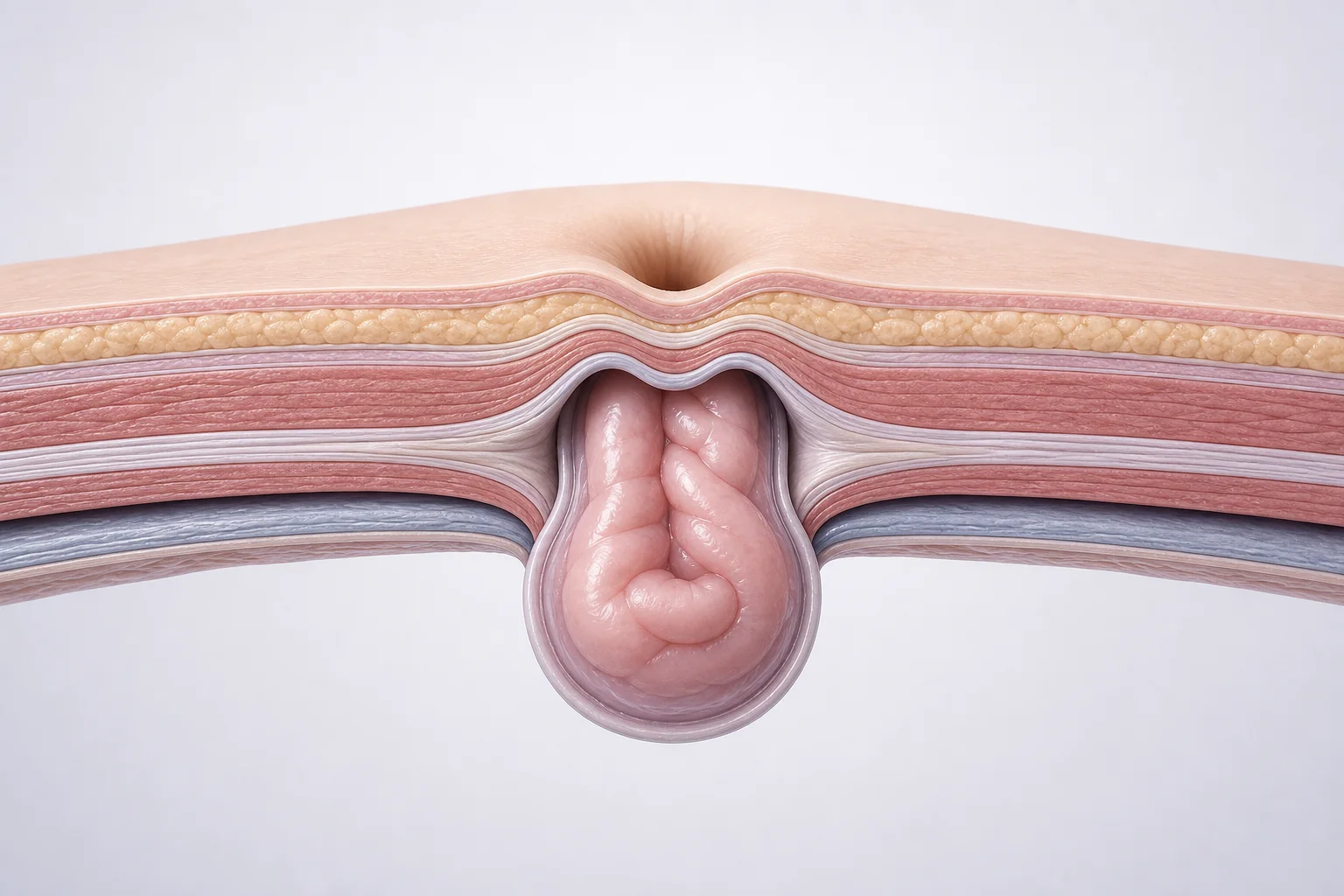
Dr. Joseph Gharios provides umbilical hernioplasty in Lebanon, with treatment tailored to the size and characteristics of the hernia, symptoms, abdominal wall anatomy, and individual patient factors.
When surgery is indicated, the objective is to repair the defect securely while reducing the risk of recurrence and supporting a safe recovery.
What Is an Umbilical Hernia?
An umbilical hernia develops through a weakness in the abdominal wall at or near the belly button.
In adults, factors that increase pressure within the abdomen may contribute to its development or progression. The hernia may initially appear as a small bulge and become increasingly noticeable over time.
Some umbilical hernias cause little discomfort, while others may result in pain, pressure, or limitations during daily activities.
A surgical evaluation helps determine whether monitoring or repair is the appropriate approach.
Common Symptoms of an Umbilical Hernia
An umbilical hernia may present with:
- A visible bulge around the navel
- Pain or tenderness
- Pressure or discomfort
- A bulge that becomes more noticeable when coughing or straining
- Discomfort during exercise or lifting
- Progressive enlargement of the hernia
Sudden severe pain, vomiting, abdominal symptoms, or a hernia that becomes painful and cannot be pushed back requires urgent medical assessment.
When Is Umbilical Hernia Surgery Recommended?
Not every umbilical hernia requires immediate surgery.
Surgical repair may be considered when:
- The hernia causes pain or discomfort
- The defect increases in size
- Daily or physical activities are affected
- The hernia becomes difficult to reduce
- There is concern about incarceration or other complications
- Individual clinical factors support surgical treatment
The decision is based on examination, symptoms, defect size, medical history, and patient-specific risk factors.
Umbilical Hernioplasty
Umbilical hernioplasty is a surgical procedure used to repair the weakened area of the abdominal wall responsible for the hernia.
During surgery, the protruding tissue is returned to its appropriate position and the abdominal wall defect is repaired.
The technique used depends on factors including:
- Size of the hernia
- Location of the defect
- Primary or recurrent hernia
- Quality of the surrounding abdominal wall
- Previous abdominal operations
- Individual patient factors
Herniorrhaphy for Umbilical Hernia
Umbilical herniorrhaphy refers to surgical closure of the hernia defect.
For selected small defects, direct tissue repair may be appropriate. In other cases, mesh reinforcement may be recommended to strengthen the abdominal wall and support a durable repair.
The choice between tissue repair and mesh reinforcement is individualized rather than applying the same technique to every umbilical hernia.
Mesh Repair for Umbilical Hernia
Surgical mesh may be used to reinforce the abdominal wall during selected umbilical hernia repairs.
Whether mesh is appropriate depends on factors such as:
- Hernia size
- Risk of recurrence
- Quality of surrounding tissue
- Previous hernia repair
- Patient-specific clinical factors
When mesh is used, appropriate selection and positioning are important parts of surgical planning.
Open & Minimally Invasive Repair
Open Umbilical Hernia Repair
Open repair is performed through an incision near the umbilicus. The hernia is identified, the defect is repaired, and mesh may be added when appropriate.
Minimally Invasive Hernia Repair
Selected patients may be candidates for a laparoscopic or other minimally invasive approach.
Potential benefits in appropriate cases may include:
- Smaller incisions
- Reduced surgical trauma
- Earlier return to daily activities
- Improved access for selected larger or recurrent defects
The surgical approach is chosen according to the individual hernia rather than based on technique alone.
Recurrent Umbilical Hernia
An umbilical hernia may occasionally return following a previous repair.
A recurrent hernia requires careful assessment of the previous operation, current defect, abdominal wall anatomy, and whether mesh was previously used.
Treatment planning may therefore differ from that of a first-time umbilical hernia.
Recovery After Umbilical Hernia Repair
Recovery depends on the size and complexity of the hernia, the surgical technique, and the patient's overall health.
Patients are generally encouraged to begin gentle movement after surgery, while heavier activity is resumed progressively according to medical guidance.
Postoperative instructions may include:
- Wound care
- Pain management
- Walking and mobility
- Return to work
- Exercise and lifting restrictions
- Follow-up appointments
Following the recommended recovery plan supports appropriate healing of the abdominal wall.
References
- European Hernia Society (EHS)
- American College of Surgeons (ACS)
- Society of American Gastrointestinal and Endoscopic Surgeons (SAGES)
- International guidelines for primary ventral and umbilical hernia management
Frequently Asked Questions
Does an umbilical hernia go away on its own in adults?
Adult umbilical hernias generally do not close spontaneously. However, whether surgery is necessary depends on symptoms, size, progression, and individual clinical factors.
What is umbilical hernioplasty?
Umbilical hernioplasty is the surgical repair of an umbilical hernia. The abdominal wall defect is repaired, with mesh reinforcement used when appropriate.
What is the difference between hernioplasty and herniorrhaphy?
Herniorrhaphy generally refers to repairing a hernia using sutures to close the defect, while hernioplasty commonly refers to repair that may involve reinforcement such as surgical mesh. The terminology can vary according to the surgical context.
Does every umbilical hernia require mesh?
No. The decision depends on the size of the defect, risk of recurrence, tissue quality, previous repair, and other individual factors.
Can an umbilical hernia become dangerous?
An umbilical hernia can occasionally become incarcerated or strangulated. Sudden severe pain, vomiting, or a painful hernia that cannot be reduced requires urgent medical evaluation.
Can an umbilical hernia return after surgery?
Recurrence is possible after any hernia repair. Appropriate surgical technique, repair selection, and postoperative care are important considerations for long-term durability.
How soon can I return to normal activities after surgery?
Recovery varies according to the type of repair and individual patient factors. Return to work, exercise, and heavier lifting should follow personalized postoperative guidance.