
Hiatal Hernia Surgery in Lebanon Surgical Treatment for Hiatal Hernia, GERD & Persistent Acid Reflux
A hiatal hernia occurs when part of the stomach moves upward through the diaphragm into the chest. While some hiatal hernias cause no symptoms, others may contribute to gastroesophageal reflux disease (GERD), persistent heartburn, regurgitation, swallowing difficulties, or chest discomfort.
Book Your Consultation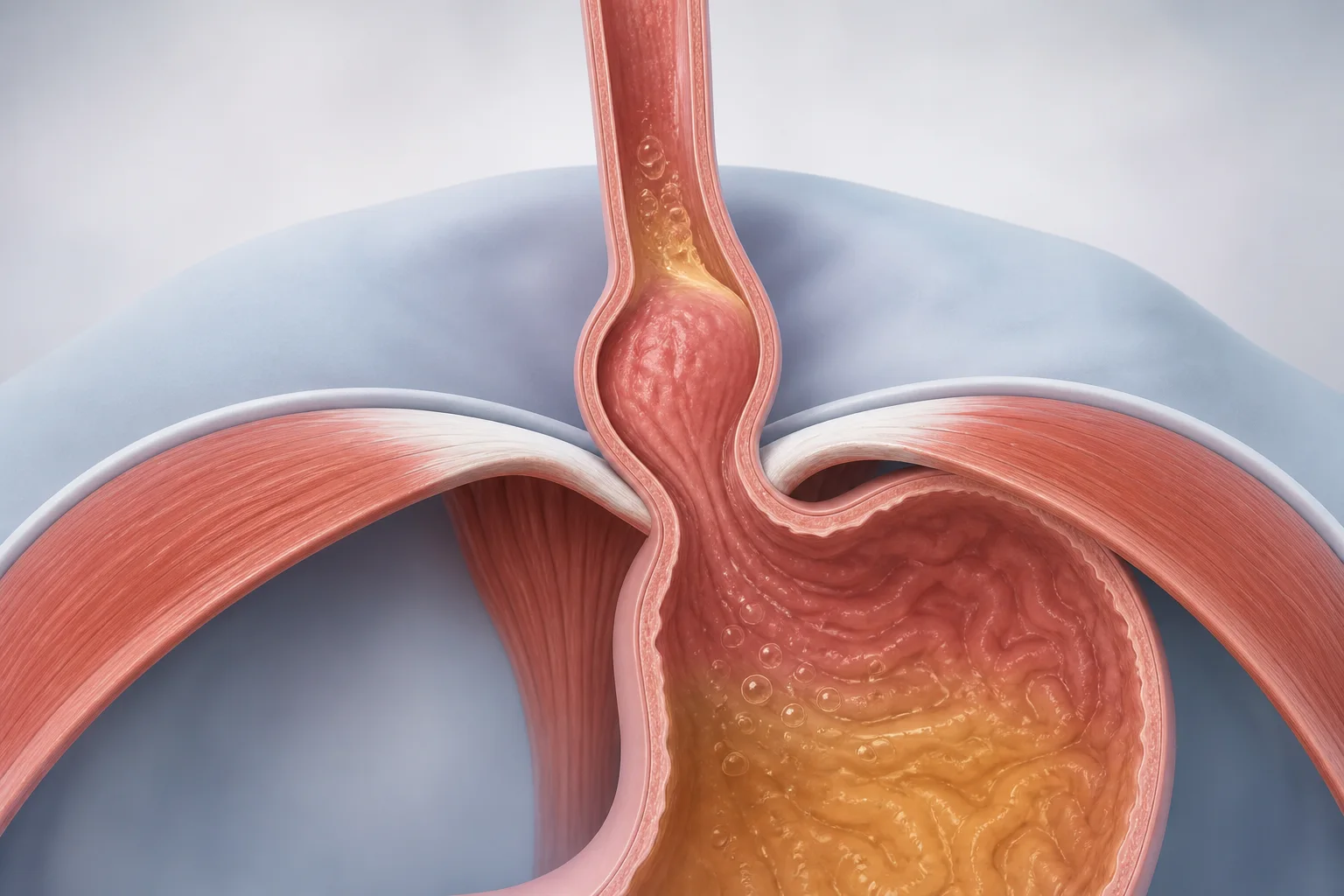
Dr. Joseph Gharios provides hiatal hernia surgery in Lebanon for appropriately selected patients, with treatment based on symptoms, diagnostic findings, anatomy, and response to previous medical therapy.
When surgery is indicated, minimally invasive techniques may be used to repair the hernia and restore the normal anatomy of the stomach and diaphragm.
What Is a Hiatal Hernia?
The diaphragm separates the chest from the abdomen. The esophagus normally passes through a small opening in the diaphragm called the hiatus before connecting to the stomach.
A hiatal hernia develops when part of the stomach moves upward through this opening.
Hiatal hernias vary in size and type. Some are discovered incidentally, while others can be associated with significant reflux or mechanical symptoms.
A proper evaluation helps determine whether symptoms are related to the hernia and whether medical or surgical treatment is appropriate.
Common Symptoms
A hiatal hernia may be associated with:
- Persistent heartburn
- Acid reflux
- Regurgitation
- Difficulty swallowing
- Upper abdominal or chest discomfort
- Feeling full quickly after eating
- Symptoms that worsen after meals or when lying down
The presence of these symptoms does not automatically mean surgery is required. Evaluation is necessary to identify their cause and select the appropriate treatment.
Hiatal Hernia & Acid Reflux
Hiatal hernia and gastroesophageal reflux disease are closely related but are not the same condition.
GERD occurs when stomach contents repeatedly flow back into the esophagus. A hiatal hernia can contribute to reflux by affecting the normal anti-reflux mechanisms at the junction between the esophagus and stomach.
Many patients can manage reflux through lifestyle changes and medication. However, acid reflux surgery in Lebanon may be considered for selected patients when symptoms remain significant or when anatomical or clinical findings support surgical treatment.
When Is Hiatal Hernia Surgery Considered?
Surgery may be considered when:
- Reflux symptoms persist despite appropriate medical treatment
- Regurgitation remains significant
- A large or symptomatic hiatal hernia is present
- A paraesophageal hernia causes symptoms or clinical concern
- Complications related to reflux or the hernia develop
- Long-term treatment planning supports a surgical approach
The decision should be individualized after appropriate diagnostic evaluation.
Evaluation Before Surgery
Before recommending hiatal hernia surgery, evaluation may include:
- Detailed medical and symptom history
- Upper gastrointestinal endoscopy
- Imaging when indicated
- Esophageal pH testing in selected patients
- Esophageal manometry when appropriate
- Assessment of previous reflux treatments
- Evaluation for associated digestive conditions
These investigations help determine whether symptoms are caused by reflux or hiatal hernia and guide the selection of the appropriate surgical technique.
Laparoscopic Hiatal Hernia Repair
When surgery is indicated, hiatal hernia repair can often be performed using a minimally invasive laparoscopic approach.
During surgery, the stomach is returned to its appropriate position below the diaphragm and the enlarged opening in the diaphragm is repaired.
For appropriately selected patients, laparoscopic surgery may offer:
- Smaller incisions
- Reduced postoperative discomfort
- Shorter hospital stay
- Faster return to daily activities
The exact technique depends on the type and size of the hernia and the patient's anatomy.
Anti-Reflux Surgery
Repairing the hiatal hernia may be combined with an anti-reflux procedure when clinically appropriate.
The objective of acid reflux surgery is to improve the barrier between the stomach and esophagus and reduce abnormal reflux.
Nissen Fundoplication
Nissen fundoplication involves wrapping the upper portion of the stomach around the lower esophagus to reinforce the anti-reflux barrier.
Partial Fundoplication
In selected patients, a partial fundoplication may be considered instead of a complete wrap.
The choice of procedure depends on factors including anatomy, symptoms, esophageal function, diagnostic findings, and individual patient characteristics.
Hiatal Hernia & Bariatric Surgery
Obesity, reflux, and hiatal hernia can sometimes occur together.
For patients who also meet criteria for bariatric surgery, the presence and severity of reflux may influence the choice of bariatric procedure.
For example, gastric bypass may be considered for selected patients with obesity and significant reflux after comprehensive bariatric and digestive evaluation.
Recovery After Hiatal Hernia Surgery
Recovery depends on the extent of the repair, the surgical technique, and individual patient factors.
Postoperative care may include:
- Progressive dietary changes
- Early walking and mobilization
- Pain management
- Wound care
- Guidance on physical activity and lifting
- Follow-up to assess symptom improvement and recovery
Patients may temporarily need to modify the texture and quantity of food while the surgical area heals.
References
- Society of American Gastrointestinal and Endoscopic Surgeons (SAGES)
- European Association for Endoscopic Surgery (EAES)
- American College of Gastroenterology (ACG)
- Evidence-based guidelines for GERD and hiatal hernia management
Frequently Asked Questions
Does every hiatal hernia need surgery?
No. Many hiatal hernias cause few or no symptoms and do not require surgery. Treatment depends on symptoms, hernia type and size, reflux severity, diagnostic findings, and individual clinical factors.
When should acid reflux be treated surgically?
Surgery may be considered for selected patients with persistent GERD, significant regurgitation, an associated hiatal hernia, or other clinical indications after appropriate evaluation.
What is laparoscopic hiatal hernia repair?
It is a minimally invasive procedure in which the stomach is repositioned below the diaphragm and the enlarged opening in the diaphragm is repaired through small abdominal incisions.
What is fundoplication?
Fundoplication is an anti-reflux procedure in which part of the upper stomach is wrapped around the lower esophagus to reinforce the barrier against reflux.
What is the difference between Nissen and partial fundoplication?
Nissen fundoplication uses a complete wrap around the lower esophagus, while partial fundoplication uses an incomplete wrap. The appropriate technique depends on the patient's anatomy and esophageal function.
Can a hiatal hernia come back after surgery?
Recurrence is possible after hiatal hernia repair. Hernia characteristics, surgical technique, anatomy, and individual patient factors can influence recurrence risk.
Can gastric bypass help patients who have obesity and severe reflux?
For appropriately selected patients with obesity and significant GERD, gastric bypass may be considered as part of the treatment strategy. The decision requires comprehensive bariatric and digestive evaluation.