Dr. Joseph Gharios
- Educational
- October 12, 2026
- 6 MINS READ
A pilonidal cyst can start as a small problem near the tailbone but become painful, infected, or recurrent over time. For some patients, the condition keeps coming back, while fear of surgery and prolonged wound care leads them to postpone treatment.
Understanding pilonidal cyst causes is important, but for patients who need treatment, another common concern is what to expect from a pilonidal cyst after surgery.
Two patients treated by Dr. Joseph Gharios illustrate why the treatment approach can make an important difference in the patient’s experience.
What Causes a Pilonidal Cyst?
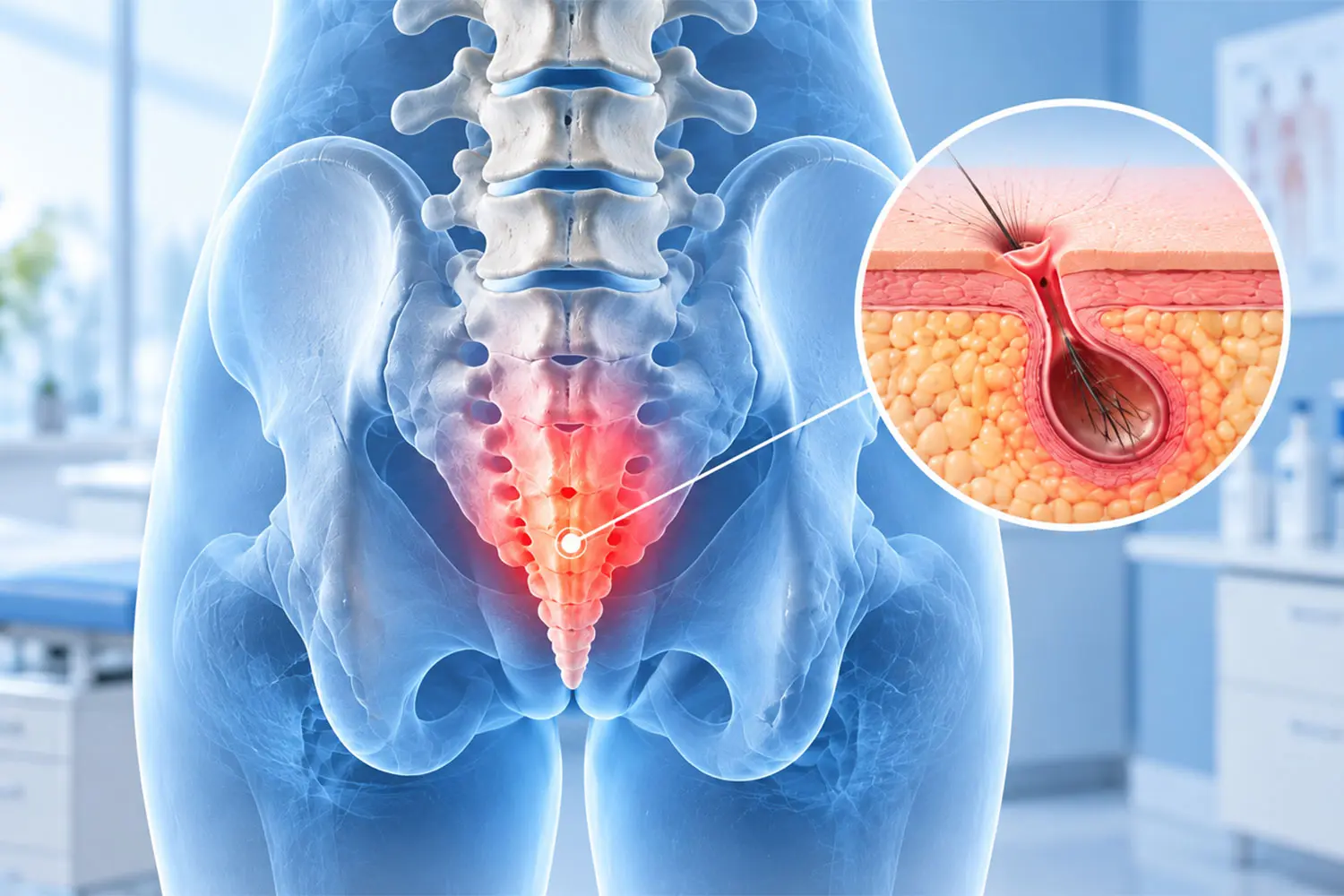
A pilonidal cyst typically develops in the cleft between the buttocks, near the tailbone. Hair and debris can penetrate or become trapped beneath the skin, triggering inflammation and sometimes infection.
Several factors may contribute to the development or recurrence of pilonidal disease, including:
- Hair penetrating the skin
- Friction and repeated pressure in the area
- Prolonged sitting
- A deep natal cleft
- Local irritation
- Previous pilonidal disease
Once infected, the area may become painful, swollen, or begin draining. Some patients experience repeated episodes in which the symptoms improve and then return.
Dr. Gharios manages pilonidal disease as part of his proctology practice, with treatment selected according to the individual presentation.
Why Does a Pilonidal Cyst Keep Coming Back?
Recurrence is one of the main concerns with pilonidal disease.
A patient may initially experience an abscess that drains or temporarily improves, but the underlying sinus tract can remain. Symptoms can then return later.
Recurrent disease does not necessarily look the same in every patient. Some experience repeated swelling and pain, while others develop persistent drainage or have difficulty healing after previous surgery.
This is why recurrent symptoms deserve proper evaluation rather than repeatedly waiting for the inflammation to settle on its own.
A Real Patient Case: Fear of Surgery Delayed His Treatment
One of Dr. Gharios’s patients, a man around 50 years old, had been suffering from a recurrent pilonidal cyst.
He knew several people who had undergone conventional surgery and had heard about their experiences with prolonged wound care. Some had needed wound dressing changes for months and had experienced difficulty with wound closure.
Because of what he had seen and heard, he did not want to undergo surgery.
Instead, he continued living with the recurrent problem and the discomfort it caused.
Eventually, he learned that Dr. Gharios performs a laser technique for pilonidal disease and came for an evaluation.
The patient underwent the laser procedure and returned home the same day. Unlike the open surgical experience he had feared, he did not have a large open wound requiring the type of prolonged dressing care he had been worried about.
According to Dr. Gharios, the patient was very satisfied with his experience and recovery.
A Second Case: After Two Previous Open Surgeries
Another patient came to Dr. Gharios with a very different history.
He had already undergone two conventional open operations for pilonidal disease. His experience had been difficult, with repeated wound dressing and problems with the wound healing properly.
After recurrent disease despite those previous procedures, he consulted Dr. Gharios and underwent treatment using the laser technique.
In this patient’s case, the area subsequently healed.
The case is particularly relevant because it shows how recurrent pilonidal disease may require reassessment, especially when a patient has already undergone previous surgery.
What Is a Pilonidal Cyst Like After Surgery?
When patients search for information about a pilonidal cyst after surgery, one of their biggest concerns is usually the wound.
Recovery depends significantly on the procedure performed. Traditional surgical approaches may involve excising the affected tissue, and some techniques leave a wound that requires ongoing care while it heals.
Minimally invasive approaches aim to treat the pilonidal sinus while limiting tissue damage and avoiding a large open wound in appropriately selected patients.
However, laser treatment is not automatically the right choice for every pilonidal cyst. The extent of the disease, previous procedures, active infection, anatomy, and individual patient factors need to be assessed before deciding on treatment.
Can You Prevent a Pilonidal Cyst From Coming Back?
Because several factors can contribute to pilonidal cyst causes and recurrence, postoperative care remains important regardless of the technique used.
Keeping the area clean, following wound-care instructions, and following your surgeon’s recommendations regarding hair management and activity may be part of reducing recurrence risk.
Patients should also seek medical advice if pain, swelling, redness, or drainage returns after treatment.
Frequently Asked Questions
What causes a pilonidal cyst?
Pilonidal disease is commonly associated with hair becoming embedded beneath the skin in the cleft near the tailbone. Friction, pressure, prolonged sitting, and individual anatomy can contribute.
Can a pilonidal cyst come back after surgery?
Yes. Pilonidal disease can recur after treatment. The risk depends on several factors, including the extent of disease, treatment technique, healing, and individual characteristics.
How long does a pilonidal cyst take to heal after surgery?
Healing time varies depending on the procedure. An open wound may require a longer period of wound care, while minimally invasive approaches can have a different recovery process.
Is laser treatment possible for recurrent pilonidal cysts?
It may be an option in selected patients. In Dr. Gharios’s second clinical case, laser treatment was performed after the patient had already undergone two previous open procedures. Individual assessment is necessary to determine whether the technique is appropriate.
Does pilonidal laser surgery leave an open wound?
Laser techniques are designed to avoid the large open wound associated with some conventional procedures. The exact postoperative wound and recovery depend on the technique and individual case.
The Treatment Experience Does Not Have to Be the Same for Every Patient
The first patient delayed treatment because he was afraid of spending months caring for an open wound. The second had already experienced two open surgeries before seeking another approach.
Both eventually underwent laser treatment for their pilonidal disease.
Their experiences highlight an important message from Dr. Gharios: having a pilonidal cyst does not mean every patient will undergo the same operation or have the same recovery.
Understanding the disease, why it keeps recurring, and which treatment is appropriate for the individual patient is essential before deciding on surgery.
Patients dealing with recurrent pilonidal disease can learn more about Dr. Gharios’s approach through his proctology services, or book a consultation with Dr. Joseph Gharios for an individual assessment.
References
- American Society of Colon and Rectal Surgeons (ASCRS) — clinical guidance on pilonidal disease
- European Society of Coloproctology (ESCP) — guidelines for the management of pilonidal disease
- Evidence-based clinical literature on minimally invasive and laser treatment of pilonidal sinus disease
GET IN TOUCH
Book Your Consultation
Consultations are available at Hôtel-Dieu de France Hospital in Beirut.