Dr. Joseph Gharios
- Educational
- October 2, 2026
- 6 MINS READ
Hemorrhoids are common, but not every patient experiences them in the same way. One person may arrive with severe pain, while another may notice bleeding, pressure, or tissue protruding from the anus.
Understanding what causes hemorrhoids is important, but so is recognizing that there are different types of hemorrhoids—and that their symptoms and treatment can be very different.
Two recent cases from Dr. Joseph Gharios’s practice illustrate this distinction particularly well.
What Causes Hemorrhoids?
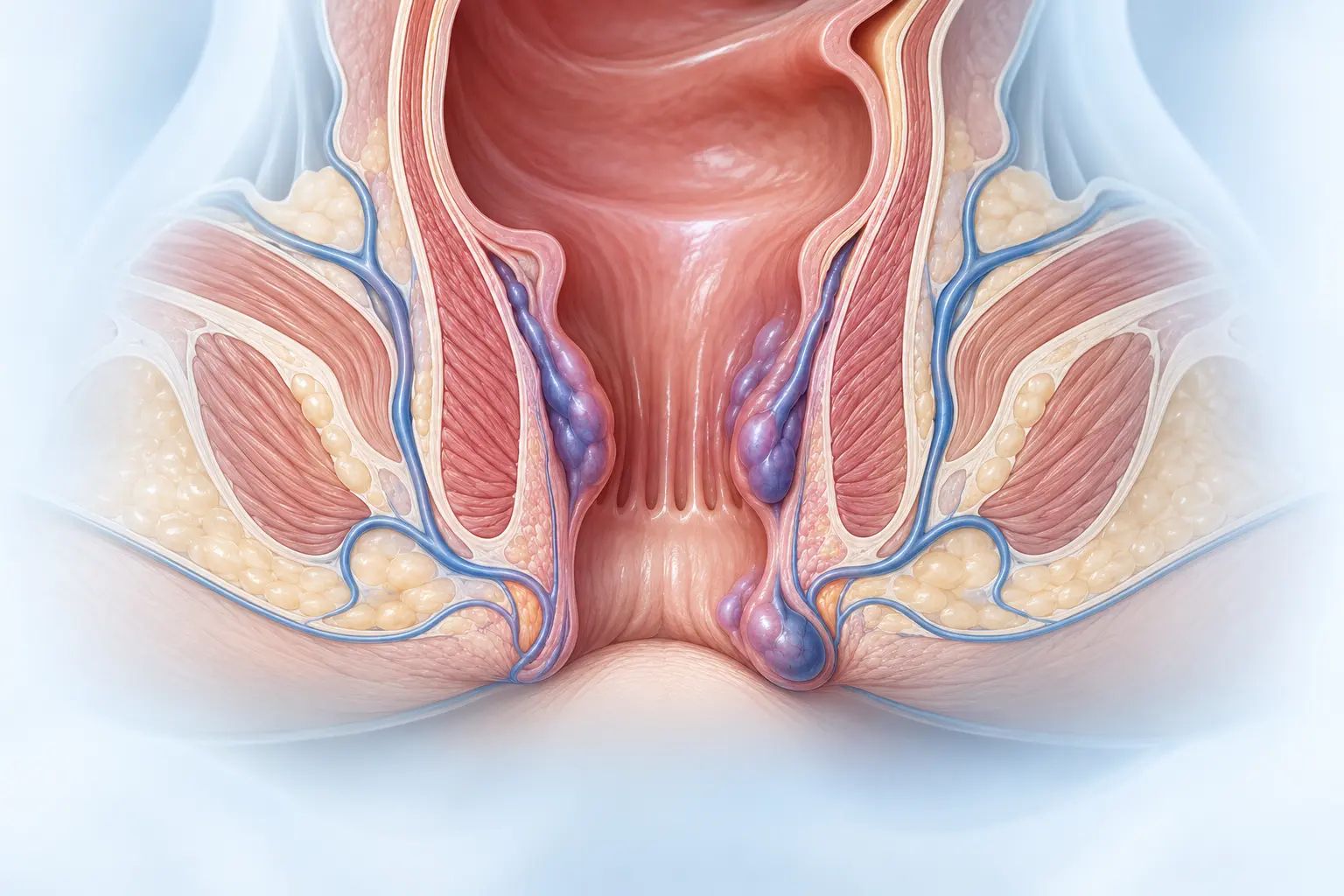
Hemorrhoids are swollen vascular structures in and around the anal canal. They can become symptomatic when increased pressure, straining, or other factors cause them to enlarge or become irritated.
Common hemorrhoid causes and contributing factors can include:
- Constipation and repeated straining
- Spending prolonged periods on the toilet
- Pregnancy
- Increased pressure within the abdomen
- Aging and weakening of the supporting tissues
- Repeated heavy lifting
- Chronic diarrhea or changes in bowel habits
However, knowing the possible cause is only part of the diagnosis. The location and type of hemorrhoid can help explain why one patient experiences intense pain while another experiences primarily bleeding or prolapse.
Dr. Gharios evaluates hemorrhoids and other anorectal conditions as part of his proctology practice.
Internal vs. External Hemorrhoids: What Is the Difference?
There are two main categories: internal hemorrhoids and external hemorrhoids.
Internal hemorrhoids develop inside the anal canal. They typically do not cause significant pain because of their location, but they can cause bleeding, a sensation of pressure or heaviness, and prolapse, where the hemorrhoidal tissue protrudes outside the anus.
External hemorrhoids develop around the outside of the anus. If a blood clot develops inside an external hemorrhoid—a condition known as a thrombosed external hemorrhoid—the pain can be sudden and very intense.
This distinction was clearly demonstrated by two patients treated by Dr. Gharios.
A Real Patient Case: From 10/10 Pain to Immediate Relief
One patient came to Dr. Gharios’s clinic because he was experiencing extremely severe anal pain, which he described as 10 out of 10.
The intensity of the pain was an important clue.
After examination, Dr. Gharios identified a thrombosed external hemorrhoid. In this condition, a blood clot develops within the external hemorrhoid, creating significant pressure and pain.
A small incision was performed in the clinic to treat the thrombosis.
According to Dr. Gharios, the difference was immediate: the patient had arrived describing his pain as 10/10 and left reporting no pain.
The case demonstrates why examination matters. Saying “I have hemorrhoids” does not necessarily tell the physician what is actually causing the symptoms. Identifying whether the problem is internal, external, thrombosed, or another anorectal condition guides the appropriate treatment.
A Different Patient, A Different Type of Hemorrhoid
Another patient presented very differently.
Instead of severe pain, this patient had internal hemorrhoids. His main complaints included bleeding, a sensation of heaviness, and hemorrhoidal tissue protruding outside.
Surgery was recommended, but the patient was initially hesitant.
His concern was something Dr. Gharios frequently hears from patients: he had been told by other people that hemorrhoid surgery was extremely painful, and this made him reluctant to undergo the procedure.
The patient eventually underwent laser treatment for his hemorrhoids.
His postoperative experience was much easier than he had expected, and according to Dr. Gharios, the patient was relieved by how little pain he experienced following the laser procedure.
These two cases had the same broad diagnosis—hemorrhoidal disease—but the symptoms, type of hemorrhoid, and treatment were different.
Why Hemorrhoids Don’t Always Feel the Same
Patients sometimes assume that hemorrhoids must hurt. But symptoms depend significantly on whether the hemorrhoids are internal or external and whether a complication such as thrombosis has developed.
A patient with internal hemorrhoids may primarily notice bright red bleeding, prolapse, pressure, or heaviness. A patient with a thrombosed external hemorrhoid, on the other hand, may develop sudden and severe pain.
That is why symptoms such as anal pain or rectal bleeding should not automatically be self-diagnosed as “just hemorrhoids.”
An examination can determine the cause and whether conservative management, an office-based procedure, or surgical treatment is appropriate.
Does Having Hemorrhoids Always Mean You Need Surgery?
No. Treatment depends on the type of hemorrhoid, the severity of symptoms, and how much the condition affects the patient.
Some patients may improve with changes aimed at reducing constipation and straining. Other patients with persistent bleeding, significant prolapse, thrombosis, or symptoms that interfere with everyday life may require a procedure.
The goal is not simply to treat “hemorrhoids” as one condition, but to identify what type of hemorrhoidal disease is present and choose treatment accordingly.
Frequently Asked Questions
What causes hemorrhoids?
Hemorrhoids can be associated with increased pressure and straining in the anal region. Constipation, prolonged sitting on the toilet, pregnancy, repeated heavy lifting, chronic diarrhea, and age-related changes can contribute to their development.
Are internal hemorrhoids painful?
Internal hemorrhoids typically do not cause significant pain. Bleeding, pressure, and prolapse are more characteristic symptoms. Pain may suggest another problem or a complication that should be evaluated.
Why can external hemorrhoids be so painful?
An external hemorrhoid can become very painful when a blood clot develops inside it. This is known as a thrombosed external hemorrhoid.
Can hemorrhoids cause bleeding?
Yes. Bleeding is a common symptom of internal hemorrhoids. However, rectal bleeding can have other causes, so recurrent or unexplained bleeding should be medically evaluated rather than automatically attributed to hemorrhoids.
Is hemorrhoid laser treatment painful?
The experience varies according to the procedure and individual patient. In Dr. Gharios’s clinical case, the patient who underwent laser treatment reported much less postoperative pain than he had feared before surgery.
The Same Diagnosis Can Require Different Treatment
The two cases highlight an important point about hemorrhoidal disease.
One patient arrived with 10/10 pain from a thrombosed external hemorrhoid and experienced rapid relief following a small procedure in the clinic. Another had internal hemorrhoids with bleeding, heaviness, and prolapse and underwent laser treatment.
Understanding what causes hemorrhoids is useful, but identifying the type of hemorrhoid and the reason behind the symptoms is equally important.
Persistent bleeding, severe anal pain, recurrent symptoms, or tissue protruding from the anus should therefore be properly evaluated rather than treated based only on assumptions or other people’s experiences.
Patients experiencing these symptoms can learn more about Dr. Gharios’s approach to proctology and hemorrhoid care or book a consultation with Dr. Joseph Gharios for an individualized assessment.
References
- American Society of Colon and Rectal Surgeons (ASCRS) – clinical practice guidance on hemorrhoidal disease
- European Society of Coloproctology (ESCP) – guidance on hemorrhoidal disease management
- American College of Surgeons (ACS) – patient information on hemorrhoids and surgical treatment
- Evidence-based clinical literature on internal, external, and thrombosed hemorrhoidal disease
GET IN TOUCH
Book Your Consultation
If you are experiencing bleeding, severe anal pain, recurrent hemorrhoid symptoms, or tissue protruding from the anus, further evaluation can help identify the cause and appropriate treatment.
Consultations are available at Hôtel-Dieu de France Hospital in Beirut.