Dr. Joseph Gharios

Dr. Joseph Gharios

Anal Fistula & Crohn’s Disease: When Recurrent Fistulas Need Further Investigation

Anal Fistula & Crohn’s Disease: When Recurrent Fistulas Need Further Investigation

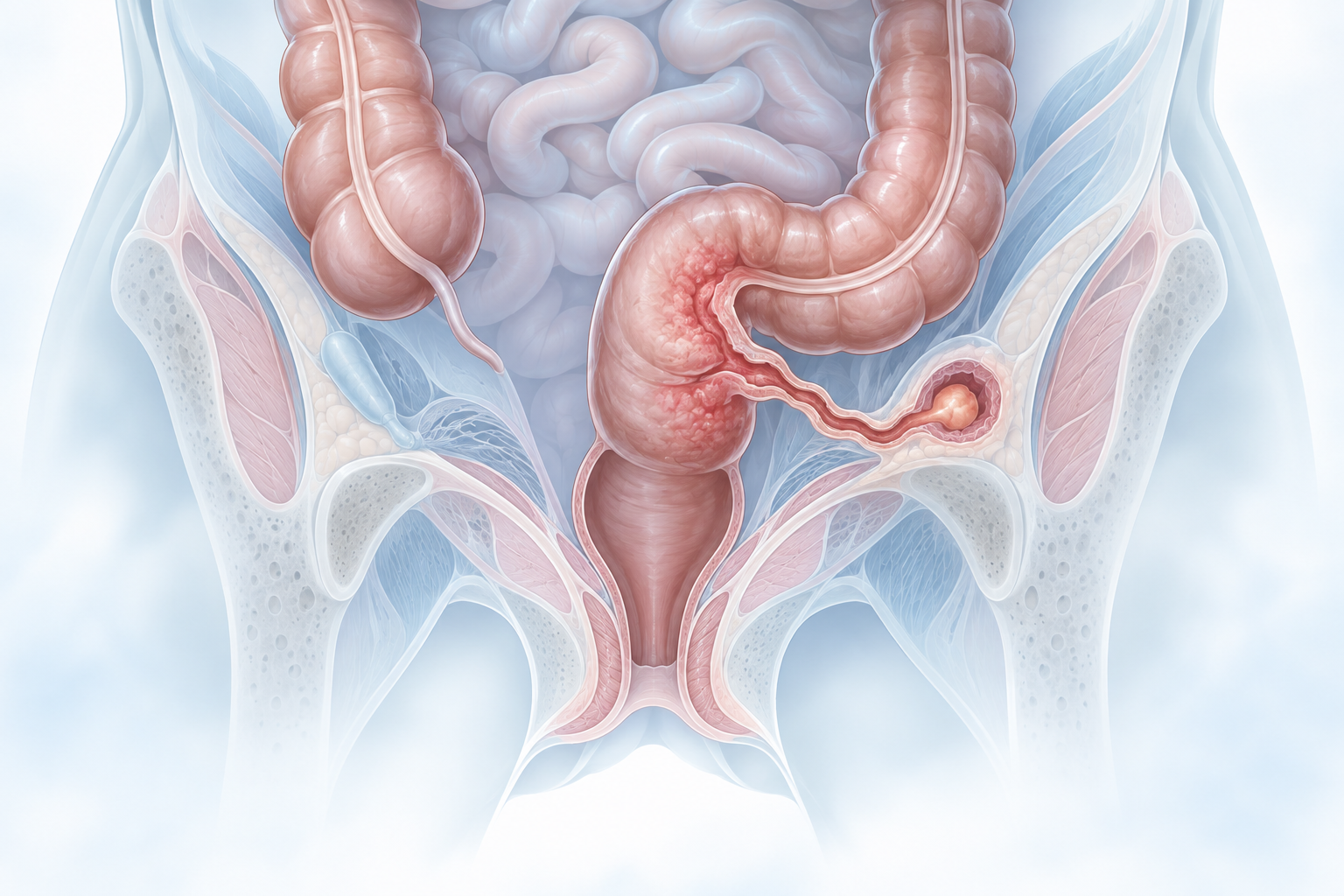
An anal fistula often develops after an infection or perianal abscess. In many patients, it can be treated surgically. But what happens when fistulas repeatedly return, wounds do not heal as expected, or multiple abscesses continue to develop?

In some cases, recurrent fistulizing disease may be associated with an underlying condition such as Crohn’s disease.

A recent clinical case managed by Dr. Joseph Gharios illustrates why recurrent anal fistula and Crohn’s disease presentations deserve further investigation rather than simply repeating the same surgical treatment.

What Is an Anal Fistula?

An anal fistula is an abnormal tunnel that connects the anal canal to the skin near the anus. It often develops after an abscess has drained, either spontaneously or after surgical treatment.

Patients may experience:

  • Recurrent swelling around the anus
  • Pain or discomfort
  • Persistent or intermittent drainage
  • Pus or blood from an opening near the anus
  • Repeated perianal abscesses

As explained in Dr. Gharios’s proctology and anal fistula care, treatment depends on the anatomy of the fistula, with particular attention to treating the disease while preserving sphincter function.

What Are the Different Anal Fistula Types?

Different anal fistula types are classified according to their pathway and their relationship with the anal sphincter muscles.

Understanding the fistula anatomy is important because it can influence the choice of treatment.

A fistula may be relatively simple, while others may involve more complex pathways, recurrent abscesses, or multiple tracts. Recurrent or complex disease can sometimes indicate that another underlying condition should be considered.
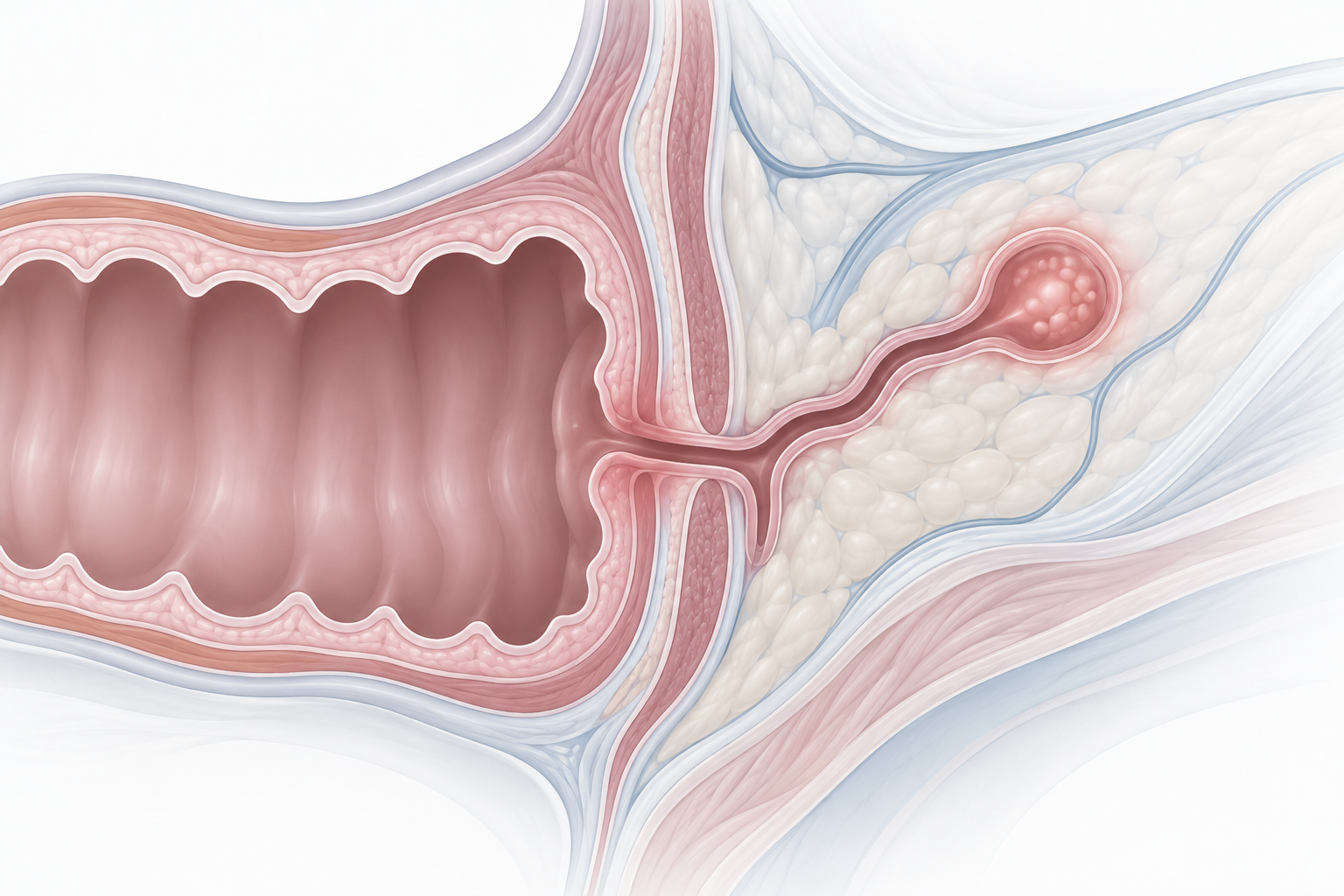
Simplified clinical illustration of an inflammatory tract and localized inflammation pocket

What Is the Connection Between Anal Fistula and Crohn’s Disease?

Crohn’s disease is an inflammatory bowel disease that can affect different areas of the digestive tract.

In some patients, Crohn’s disease can also affect the perianal region and present with fistulas, abscesses, or poor wound healing.

This means that repeatedly treating the fistula itself may not address the complete problem if an underlying inflammatory disease is contributing to its recurrence.

Dr. Gharios’s digestive surgery practice also includes the surgical management of inflammatory bowel disease when surgery is indicated.

A Real Patient Case: Recurrent Fistulas That Wouldn’t Heal

A 63-year-old man, an active smoker, was referred to Dr. Joseph Gharios because of recurrent perianal fistulizing disease.

An important part of his medical history was that his mother had Crohn’s disease.

The patient had developed perianal fistulas that had been treated repeatedly with fistulotomy. However, instead of healing normally, the clinical course became increasingly complicated.

He experienced:

  • Delayed wound healing
  • Recurrent anal fistulas
  • Multiple perianal abscesses
  • Repeated surgical drainage
  • Continued recurrence despite treatment

The persistence of the disease raised the question of whether the fistulas were a manifestation of something beyond an isolated anorectal condition.

A repeat colonoscopy was eventually performed by another physician, together with rectal biopsies.

Histological examination demonstrated epithelioid granulomas, supporting the diagnosis of Crohn’s disease.

The recurrent fistulas and perianal abscesses were ultimately recognized as manifestations of perianal Crohn’s disease.
Frequently Asked Questions

Yes. Crohn’s disease can involve the perianal region and may be associated with fistulas and recurrent perianal abscesses.

No. Anal fistulas can recur for different reasons. However, persistent or recurrent fistulas, poor healing, multiple abscesses, or other relevant clinical findings may justify further investigation.

Anal fistulas can have different pathways and relationships with the anal sphincter muscles. Identifying the anatomy helps determine the appropriate treatment approach.

Fistulotomy may be appropriate for selected fistulas. The choice of procedure depends on the fistula anatomy, sphincter involvement, underlying disease, and individual patient factors.

Family history can be clinically relevant when evaluating a patient for possible inflammatory bowel disease, particularly when other findings raise suspicion.

What Can We Learn From This Case?

This case illustrates an important point: recurrent anal fistulas should not always be viewed as an isolated surgical problem.

When fistulas repeatedly return, wounds heal poorly, or patients develop recurrent perianal abscesses despite treatment, further investigation may be necessary.

In this patient, the family history was also particularly relevant. His mother had Crohn’s disease, and the eventual diagnosis showed that his recurrent perianal disease was associated with late-onset Crohn’s disease.

The lesson is not that every recurrent anal fistula means Crohn’s disease. Rather, persistent or unusual disease patterns should encourage clinicians to consider whether an underlying condition may be contributing to the problem.

Why Accurate Diagnosis Matters Before Repeated Surgery

Treating an anal fistula requires more than identifying the external opening.

The patient’s history, fistula anatomy, previous procedures, healing pattern, recurrent abscesses, and other clinical findings can all influence the treatment strategy.

When Crohn’s disease is involved, recognizing the underlying inflammatory condition is particularly important because management may require a broader, multidisciplinary approach rather than repeated surgical treatment alone.

When Recurrent Disease Deserves a Second Look

The key message from this case is not to assume that every recurrent fistula simply needs another procedure.

A pattern of recurrent fistulas, repeated abscesses, and delayed healing may warrant a broader investigation into why the disease keeps returning.

For this 63-year-old patient, that investigation ultimately revealed late-onset Crohn’s disease and explained the repeated perianal complications.

Patients experiencing recurrent fistulas or perianal abscesses can read more about Dr. Gharios’s approach to proctology care, including evaluation and treatment of anal fistulas.

References

  • American Society of Colon and Rectal Surgeons (ASCRS) – clinical guidance on anorectal abscess and fistula
  • European Crohn’s and Colitis Organisation (ECCO) – guidance on Crohn’s disease and perianal disease
  • European Society of Coloproctology (ESCP) – guidance related to anal fistula management
  • Evidence-based clinical literature on perianal fistulizing Crohn’s disease


Book Your Consultation

GET IN TOUCH

Book Your Consultation

If you are experiencing recurrent anal fistulas, repeated perianal abscesses, persistent drainage, or poor healing after previous treatment, further evaluation can help determine the underlying cause and appropriate management.

Book a consultation with Dr. Joseph Gharios at Hôtel-Dieu de France Hospital in Beirut.

SHARE THIS ARTICLE

Leave a Reply

Your email address will not be published. Required fields are marked *